Cymatics: The Quiet Geometry of Sound
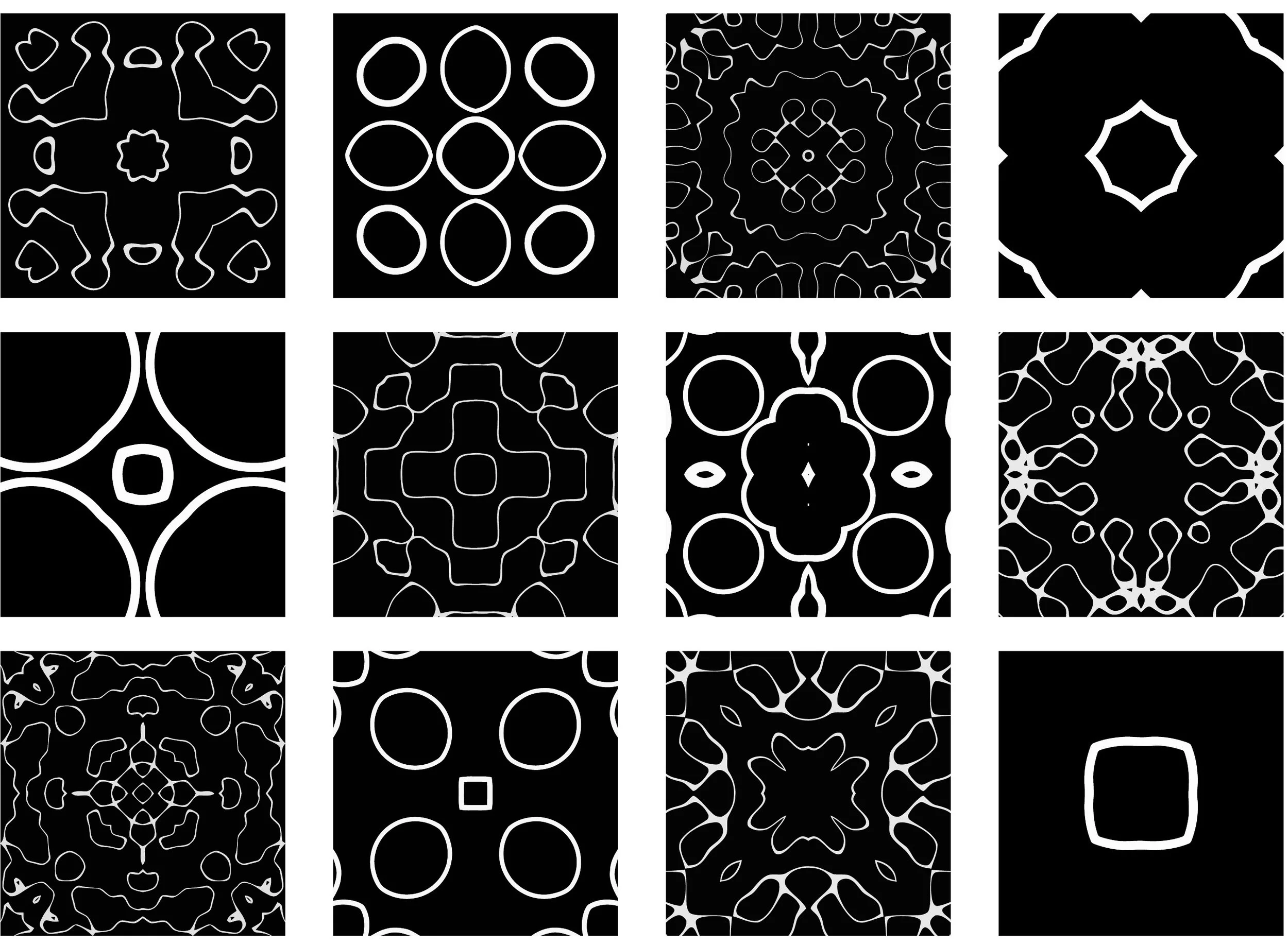
If you’ve ever watched sand jump into intricate geometric shapes on a vibrating plate, you’ve already met cymatics—even if you didn’t know its name.
Cymatics is the study of how sound and vibration create visible patterns in physical matter. When something vibrates—whether it’s a metal plate, water, or air—those vibrations move energy through space. Particles respond by settling into organized shapes, often symmetrical and surprisingly beautiful.
Different frequencies create different patterns.
Change the sound, and the shape changes too. t’s not magic—it’s physics. But it does look a little magical.
Sound is movement. Movement creates pressure. Matter responds to pressure by organizing itself.
Cymatics is simply what happens when we make that process visible. Cymatic patterns show us that sound isn’t just something we hear—it’s something that shapes space. It gives us a visual language for something we usually experience invisibly.
And in recent years, cymatics has also shown up in serious scientific research—not as art, but as a tool.
The Stanford Heart Study: Sound in the Lab
At Stanford University, researchers including Dr. Utkan Demirci and Dr. Sean Wu explored how sound could be used in medical and tissue engineering research, particularly in the study of heart tissue. Their question wasn’t philosophical—it was practical: How can we organize living cells in a lab without touching or damaging them?
In a controlled laboratory setting, living cells were placed into a liquid or soft gel. Then, researchers introduced carefully calibrated sound or ultrasound waves. As the sound moved through the material, it created gentle pressure patterns—similar to ripples spreading across water.
The cells responded naturally. They moved with those pressure zones and gathered into organized shapes.
Organizing cells is a big deal in medical research. Structure affects how tissues function—especially in the heart, where alignment and coordination matter.
Using sound as a tool allows researchers to:
Arrange cells precisely
Study how tissues form
Explore new ways to grow structured tissue in the lab
Cymatics reminds us that sound:
Moves matter
Creates structure
Shapes form without direct contact
Sometimes it reveals patterns that were already possible. Sound doesn’t arrange the world for us—it shows us how things naturally respond. Even the unseen carries a language of form.
https://stanmed.stanford.edu/innovations-helping-harness-sound-acoustics-healing/